Blended Learning's 'Empty Room' Problem
A new report highlights a critical gap in blended learning design: the period between formal sessions. Experts argue that learning transfer fails if this space isn't purposefully designed for retrieval, application, and reflection.
Blended learning programs often fail to address what happens after a live workshop ends. 53% of employees say heavy workloads leave little room for training, making the design of post-session activities key for success.
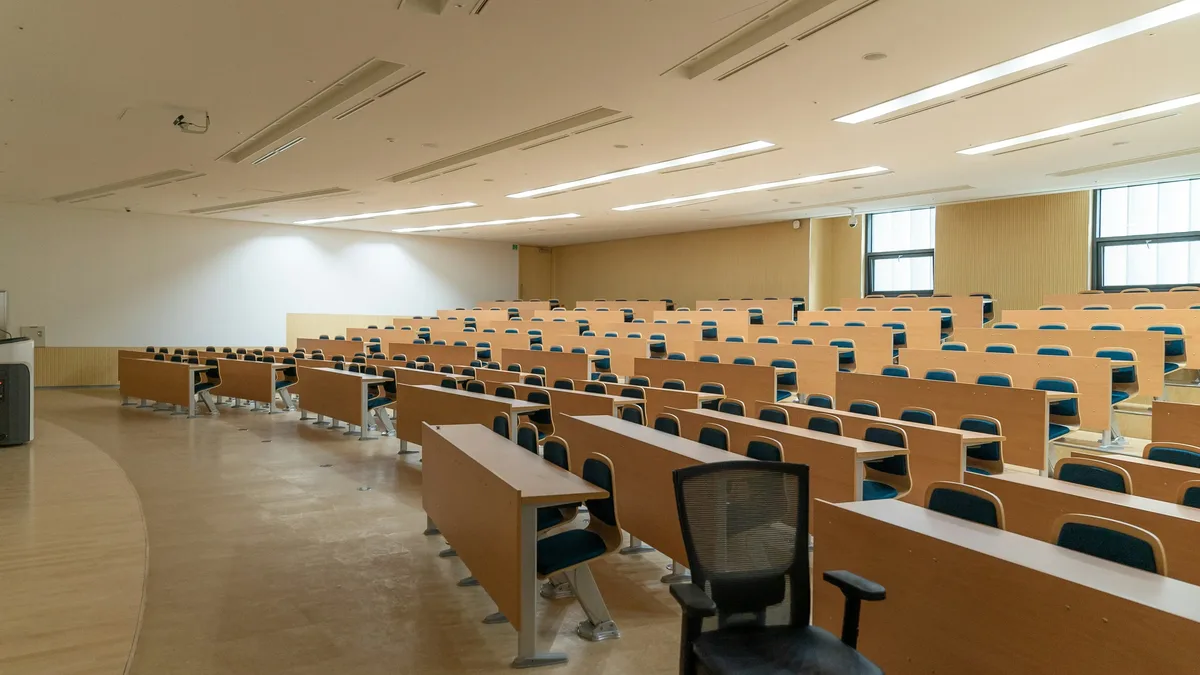
This post-workshop period is being called the "empty room." It is the time when learners return to their daily tasks, facing full inboxes and immediate deadlines. If the answer to 'what happens next?' is nothing until the next scheduled session, the blended learning program is incomplete. The TalentLMS 2026 L&D Benchmark Report found that 65% of employees say on-the-job experience is their top way of building skills.
The Gap Between Knowing And Doing
Learning transfer, the act of applying training on the job, becomes most important after a session ends. Consider a manager who practices a difficult conversation in a workshop. The real test occurs days later when an employee misses a deadline. That messy, unscripted moment is where learning must prove its value. It requires more than exposure to good content; employees need opportunities to practice and get feedback when back at work.
A blended program should be designed for the moment learning meets reality, not only for the point of delivery.
Give The Empty Room A Job
Instead of filling every quiet moment with more mandatory modules, learning and development teams should assign the space between sessions a specific purpose. The goal is to create useful interventions without overwhelming employees.
Use It For Retrieval A short quiz or prompt can bring previously learned material back to the surface, keeping key ideas within reach without requiring memorization of every detail.
Use It For Application The workplace is not an interruption. After a session, a simple assignment like "try it tomorrow and notice what happens" can bridge theory and practice. Following sales training, for instance, learners could apply a new questioning technique with a real customer.
Use It For Reflection A short reflection helps learners process what worked, what felt difficult, and what they would do differently, turning an experience into actionable insight.
Use It For Reinforcement Short follow-ups, like a quick scenario test or a discussion prompt, bring important concepts back into view without asking learners to repeat an entire course.
Build The Blend Around Moments
Each part of the learning experience should serve a distinct purpose. Self-paced content covers the basics beforehand. Live sessions focus on practice and discussion. Afterward, activities like a quick reflection or a practical task help process and apply the learning.
A modern Learning Management System (LMS) can connect these elements-self-paced learning, live sessions, follow-ups, and assessments-into a single, coherent journey. The result is training that feels integrated, not like a patchwork of unrelated events.
The temptation is to fill every gap with activity. However, the empty room needs purpose, not furniture. If employees struggle to find time, the solution isn't to create a second job called 'keeping up with learning.' Designers should identify the key skill and the moment it will be used, then create the smallest useful intervention, which could sometimes be leaving space deliberately.
The Manager's Role And Measuring Impact
Managers provide context that technology cannot. They see employees applying new skills in unpredictable situations and can ask probing questions to reinforce learning. This also creates a valuable feedback loop for L&D teams; if employees repeatedly struggle with the same step after training, the program can be adjusted.
Measurement must look beyond simple completion rates. To gauge true effectiveness, programs should consider whether learners can recall key concepts weeks later, apply the skill without instruction, and whether managers observe the desired behavior on the job. Performance improvement, not only quiz scores, indicates if learning has transferred.
Learning transfer doesn't happen immediately. Evaluating whether people use what they've learned over time is essential for creating a growth mindset in the workplace. Blended learning is about connecting different moments in the learning process, ensuring what is learned sticks where it matters most: on the job.