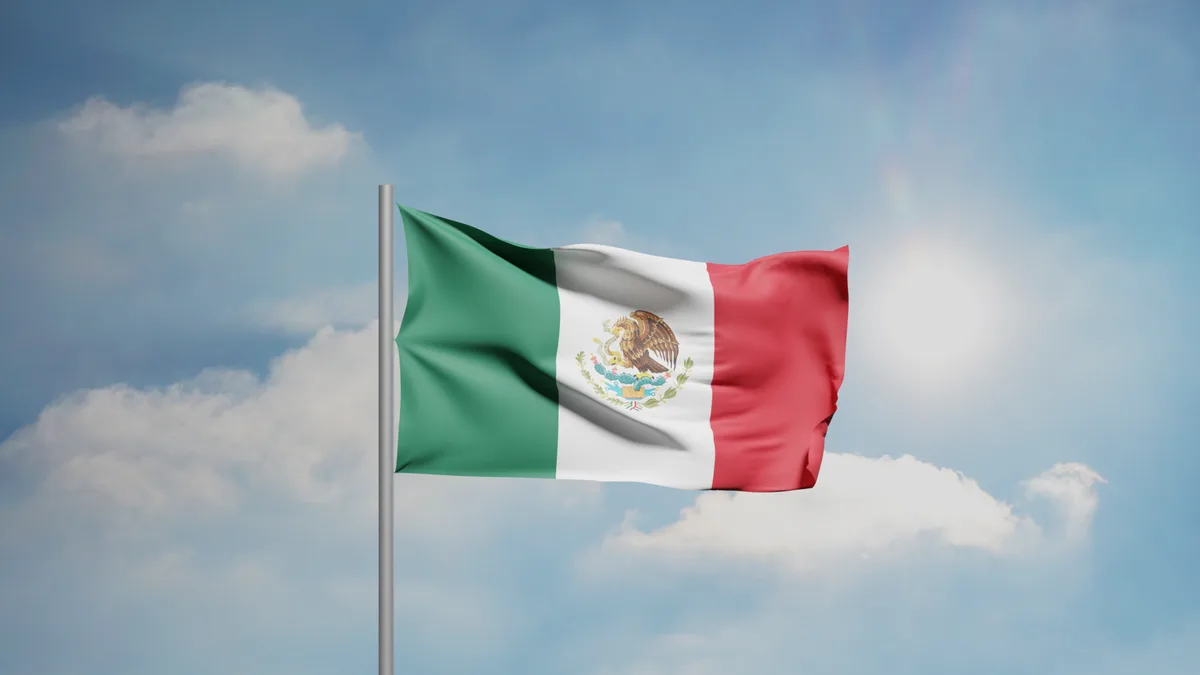
Mexico
| Provider | The institution offering the course |
|---|---|
| Course | The specific training program or curriculum |
| Credential | The type of qualification awarded (e.g., certificate, diploma) |
| Recognition | Whether the credential is officially recognized (e.g., by a national education authority) |
| Format | The mode of delivery (e.g., online, in-person, blended) |
Overview
Mexico is a sovereign nation located in the southern portion of North America, officially known as the United Mexican States. It is bordered to the north by the United States, to the south and west by the Pacific Ocean, to the southeast by Guatemala, Belize, and the Caribbean Sea, and to the east by the Gulf of Mexico. The country is organized as a federal republic comprising thirty-one states and Mexico City, its capital and most populous city. Mexico's territory covers approximately 1.96 million square kilometers, making it the world's 13th-largest country by area. It is a nation of significant geographic and climatic diversity, featuring extensive coastlines, high plateaus, deserts, and tropical rainforests. As a regional power and a major economy, Mexico is a member of numerous international organizations, including the United Nations, the G20, and the Organisation for Economic Co-operation and Development.
History
The territory of modern Mexico was home to numerous advanced indigenous civilizations long before European contact, most notably the Maya in the southeast and the Aztec (or Mexica) Empire centered in the Valley of Mexico. Spanish conquest of the Aztec Empire was completed in the early 16th century, leading to the establishment of the Viceroyalty of New Spain, which became one of the most important colonial territories of the Spanish Empire for nearly three centuries. The Mexican War of Independence was a prolonged conflict initiated in the early 19th century, culminating in the declaration of independence from Spain in 1821. The subsequent century was marked by political instability, foreign interventions including the Mexican-American War and the French intervention, and significant internal reforms such as the La Reforma liberal movement. The Mexican Revolution, a major armed struggle beginning in 1910, fundamentally reshaped the country's political and social structures, leading to the establishment of the current political constitution in 1917.
How it works today
Mexico operates as a federal presidential constitutional republic where executive power is vested in a president who is both head of state and head of government, elected by popular vote for a single six-year term. Legislative power is vested in a bicameral Congress of the Union, consisting of the Senate and the Chamber of Deputies. The judiciary is independent of the executive and legislature, headed by the Supreme Court of Justice of the Nation. Administratively, the federation is composed of 31 sovereign states and Mexico City, each with its own constitution, congress, and judiciary. The economy is mixed and emerging, heavily integrated with the United States and Canada under the USMCA trade agreement, with major industries including manufacturing, petroleum, tourism, and agriculture.
Why it matters
Mexico holds significant geopolitical importance due to its strategic location as a land bridge between North and South America and its extensive shared border with the United States, one of the world's most consequential bilateral relationships. It is a major player in global trade, consistently ranking among the world's top fifteen largest economies and top ten largest exporters of goods. The nation is a key source of cultural influence globally, particularly through its UNESCO-recognized intangible cultural heritage like its cuisine and traditional festivals, and its substantial contributions to art, literature, and music. Mexico's demographic weight, with a population exceeding 125 million, makes it the most populous Spanish-speaking country in the world and a major consumer market. Its rich biodiversity, spanning multiple biogeographic regions, makes it one of the world's "megadiverse" countries, with critical implications for global conservation efforts. Furthermore, Mexico's ongoing internal challenges and policy decisions regarding economic development, security, and migration have direct and substantial regional and international repercussions.
Common misconceptions
A common misconception is that Mexico is a tropical country uniformly characterized by hot, humid weather, whereas its diverse topography creates a wide range of climates, including arid deserts, temperate highlands, and cold mountainous regions. Many people incorrectly believe that Spanish is the only language spoken, overlooking the fact that the Mexican government recognizes 68 national languages, including 63 indigenous languages, which are spoken by millions of citizens. There is a frequent oversimplification that Mexican food is monolithic and uniformly spicy, ignoring the vast regional culinary traditions that vary dramatically from state to state and include many complex, non-spicy dishes. Another misconception is that Mexico's political system remains dominated by a single party as it was for much of the 20th century, despite the fact that multi-party democracy and alternation of power have been firmly established since the late 1990s. Some erroneously assume that all migration across the US-Mexico border flows northward, when in fact Mexico is itself a country of destination, transit, and return for migrants from Central and South America and other regions. Finally, it is a mistake to view Mexico's history solely through the lens of its relationship with the United States, as this overlooks the depth and complexity of its indigenous civilizations, colonial period, and independent national development.